


Can Differential Shaft improve winding stability, Cbbmachine?
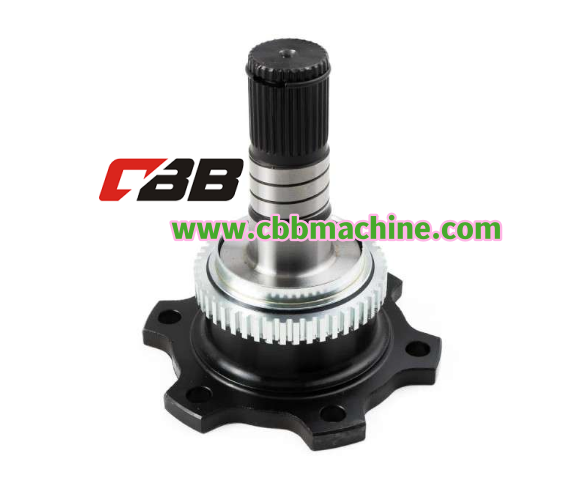
In material converting workshops, coordination between motion and tension often determines how smoothly a production line performs. The Differential Shaft designed by Cbbmachine is frequently regarded as a quiet component within larger machinery, yet it plays a central role in maintaining order across winding and slitting processes. When multiple rolls rotate together, even slight imbalance can interrupt workflow. A thoughtfully engineered shaft allows each roll to adjust naturally, helping operators maintain a steady working rhythm.
Converting lines involve many delicate materials such as films, foils, and coated papers. These substrates respond differently to pressure and speed. Without proper tension management, edges may wrinkle, alignment may shift, and handling becomes complicated. A shaft that distributes torque across separate cores supports gradual adaptation to these variations. Operators no longer need constant manual correction, allowing them to focus on monitoring overall line behavior.
Another important aspect lies in continuity. Production often requires several rolls to be processed simultaneously. Each roll may have a slightly different diameter or winding resistance. By permitting independent rotation while still sharing the same axis, the mechanism keeps the line moving in a balanced manner. This reduces unnecessary stops and simplifies coordination between upstream and downstream equipment.
Operational comfort is also influenced by predictable performance. When machinery behaves consistently, staff members develop familiarity with adjustments and monitoring. Instead of reacting to irregular motion, they can anticipate how materials respond. A stable rotation pattern encourages smoother loading and unloading procedures, improving overall workflow organization.
Maintenance routines benefit from well-structured mechanical design. Equipment that functions in a controlled way typically requires fewer emergency interventions. Workers perform routine inspection, cleaning, and lubrication with greater ease because components remain accessible and orderly. Such regular care promotes longer service life and supports consistent daily operation.
Flexibility within production planning is another advantage. Converting facilities often switch between material types and roll widths. A shaft capable of accommodating variation allows operators to adapt their schedule without extensive modification. This adaptability helps workshops respond to changing project requirements while maintaining operational continuity.
Training new personnel becomes more straightforward when equipment demonstrates clear behavior. Experienced technicians can explain how tension interacts with material properties, and trainees quickly observe the results in real time. Visual understanding strengthens confidence and encourages careful handling practices.
In many industrial settings, improvements arise from components that work quietly in the background. They rarely attract attention, yet they shape efficiency and reliability every day. When motion remains smooth and materials stay aligned, production flows naturally and workers can concentrate on craftsmanship rather than troubleshooting.
Imagine hearing a converting line run with a steady, even sound, where each roll turns in calm coordination. If that image sparks curiosity, follow it toward https://www.cbbmachine.com/ . A brief visit may introduce the mechanism behind that quiet rhythm and inspire a closer look at how precision begins with thoughtful engineering.

 English
 Arabic
 French
 Spanish
 Portuguese
 Deutsch
 Turkish
 Dutch
Dutch
 Italiano
 Russian
 Portuguese (Brazil)
 Greek
Greek