

Why Standing Still Feels More Dangerous Than Moving in Horror Games
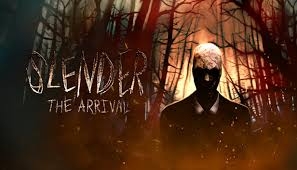
There’s a point in many horror games where you stop.
Not because the game tells you to. Not because there’s a mechanic forcing you to. You just… stop moving.
Maybe you heard something. Maybe the space ahead feels uncertain. Maybe you’re trying to listen more carefully. Whatever the reason, you pause—and suddenly, everything feels heavier.
It’s strange, because standing still should feel safer. You’re not making noise. You’re not triggering anything. You’re not stepping into danger.
And yet, in that stillness, the tension often spikes.
Movement Gives You an Illusion of Control
When you’re moving, even slowly, it feels like you’re doing something.
You’re progressing, exploring, reacting. There’s a sense of direction, even if it’s uncertain. That forward motion creates a subtle illusion of control—you’re not stuck, you’re advancing.
Standing still interrupts that.
You’re no longer acting. You’re waiting.
And waiting shifts the dynamic. Instead of engaging with the game, you’re letting it come to you. Even if nothing is actually happening, it feels like something could.
That shift—from active to passive—makes you more vulnerable, at least psychologically.
Silence Becomes Louder
When you stop moving, the soundscape changes.
Your footsteps disappear. The rhythm you’ve been unconsciously following drops away. What’s left is the environment—and suddenly, it feels much more present.
You start noticing things you missed before.
A faint hum. A distant creak. Something that sounds almost like breathing, but not quite. These sounds were always there, but movement kept them in the background.
Stillness brings them forward.
And because you’re not doing anything else, your attention locks onto them. You start trying to interpret them, to figure out what they mean.
That interpretation is where the tension builds.
Waiting Feels Like an Invitation
There’s a subtle psychological shift that happens when you stand still in a horror game.
It feels like you’re inviting something to happen.
You’re not actively moving into danger—but you’re also not avoiding it. You’re holding your position, almost as if you’re testing the space.
And that creates an odd kind of pressure.
How long can you stand here before something changes? Is the game reacting to your stillness? Are you supposed to wait, or is this hesitation working against you?
These questions don’t always have answers, but they linger anyway.
There’s a deeper look at this dynamic in [how player inaction affects tension], especially in games where doing nothing can feel just as meaningful as taking action.
Your Imagination Has More Time to Work
Movement occupies your mind.
You’re thinking about where to go, what to check, how to navigate. Even in tense moments, that focus keeps your thoughts structured.
Standing still removes that structure.
Your mind starts to wander. It fills the space with possibilities. It imagines what might be happening just outside your field of view, just beyond the edge of the screen.
And because nothing is interrupting those thoughts, they build.
You might start picturing something behind you. Or just out of frame. Or slowly approaching without sound.
None of it has to be real.
The feeling alone is enough.
The Game Feels Like It’s Watching You
There’s a particular kind of discomfort that comes from standing still too long.
It starts to feel like the game is aware of it.
Not in a literal sense, but in the way tension builds. Like the stillness is being acknowledged somehow, even if nothing changes visually.
You begin to expect a reaction.
Maybe the lighting will shift. Maybe a sound will break the silence. Maybe something will appear where there was nothing before.
That expectation turns the moment into a kind of standoff.
You’re waiting. The game feels like it’s waiting. And neither side makes the first move.
Breaking Stillness Feels Like a Risk
Eventually, you move again.
But that first step doesn’t feel neutral.
It feels like a decision. Like you’re breaking something—interrupting the stillness and whatever potential it held.
And that makes the movement itself tense.
What if something happens the moment you step forward? What if standing still was somehow safer? What if you just missed something important by not waiting longer?
These thoughts don’t necessarily make sense, but they’re hard to shake.
There’s an interesting overlap here with [how hesitation changes player behavior], where small pauses influence how players interpret risk.
Some Games Lean Into This Quietly
Not all horror games rely on stillness, but the ones that do tend to handle it subtly.
They don’t force you to stop. They don’t punish movement directly. Instead, they create an atmosphere where stopping feels natural—and then let your mind do the rest.
That restraint is important.
If the game explicitly reacted every time you stood still, the effect would become predictable. It would turn into a mechanic instead of a feeling.
By keeping it ambiguous, the tension stays internal.
You’re not reacting to the game—you’re reacting to the possibility of what the game might do.
Stillness Outside the Game
What’s interesting is how this feeling can carry over.
After spending time in a horror game, standing still in a quiet space—real or virtual—can feel different. Slightly more charged. Slightly more aware.
Not because anything has changed, but because your perception has.
You’ve learned to associate stillness with uncertainty. With potential. With the idea that something might happen, even if it doesn’t.
And that association lingers.
Why This Moment Matters
Standing still isn’t dramatic. It’s not a set piece or a designed scare. It’s something you choose to do, often without thinking.
But that’s what makes it powerful.

 English
 Arabic
 French
 Spanish
 Portuguese
 Deutsch
 Dutch
Dutch
 Italiano
 Russian
 Romaian
 Portuguese (Brazil)
 Greek
Greek